









 Guru
GuruGrilled chicken can make you a hero or a zero, affecting your long-standing grillmaster aura around the neighborhood. It’s not that you don’t know how to grill, it’s that not one piece of chicken is the same as the other. Let me explain.
Chicken legs and thighs need a different cooking style than breasts. High heat that works for one will ruin the other! Legs and thighs love slower cooking so they get done inside without burning outside, but boneless breasts cook super fast and get dry if you cook them too long.
Chicken breasts (that’s the white meat part) are like sprinters—they’re built for short, fast moves. Legs and thighs, though (the dark meat), are more like marathon runners; they’re used for stuff like walking all day and need to cook low and slow to get nice and tender.
By the cuts
Boneless Breasts
To cook juicy chicken breast fast, turn up the heat! High heat sears the outside nicely while cooking the inside super quick, so the meat doesn’t dry out. It’s a great way to keep that moisture locked in.
Bone-In Breasts
Cooking chicken breasts with the bones in takes a little longer than using the boneless kind, but trust me, they’re way better!
Season ’em up real nice with a marinade or brine first. Then, get them on the grill over direct medium-high heat, just enough to get a good sear going.
Once they look good, slide them over to indirect heat to let them finish cooking slowly. Brush on some BBQ or sweet sauce near the end to get a perfect glaze without burning anything.
The combo of searing over direct heat then slow cooking indirectly — That’s the secret sauce for awesome chicken legs, too!
Chicken Legs/Thighs
Dark meat muscles get a real workout compared to breasts, and that’s exactly why they’re packed with more flavor and juiciness. The secret to making them super tender and unlocking all that good stuff is cooking them low and slow.

Chicken legs can be tricky – they love to burn on the outside before they’re cooked through, especially with the skin on. For the best outcome, set up your grill with two heat zones: medium direct heat on one side, and a cool, indirect zone on the other (aim for around 300-350 degrees Fahrenheit).
Sear them up nicely over the direct flame, keeping a close eye on them, then slide them over to the indirect side to finish cooking slowly with the lid closed. Towards the end, brush on your favorite sauce a few times to get a gorgeous sticky glaze.
Quick tips: If you leave the skin on, keep the heat low and stay alert. You can even cook the legs on low heat the whole time, but definitely watch them closely.
Whole Chickens
A rotisserie setup with a drip pan makes for the best whole-chicken cook ever. If you don’t have one, no worries. Just set up your grill for indirect cooking over a drip pan instead.
- Charcoal grills: Light your coals. Once they’re hot, carefully push them to the opposite side of the grill. Fill a drip pan with plenty of water on the empty side.
- Gas grills: Fire up one side of the grill. Then, put a drip pan filled with water on the other side, right under the cooking grate.
Whichever way you do it, make sure the pan edges are a few inches away from the direct flames. Place your whole chicken over the drip pan, close the lid, and let it grill, turning it only once before it reaches optimal internal temperature (170 degrees Fahrenheit breasts, 185 degrees Fahrenheit thighs.)
Pick your style
Quarters

Grill your chicken quarters over direct heat for about 10–15 minutes to get the skin nice and seared.
Once they’ve got some color, move them over to the indirect heat side of the grill. Let them cook for 30–45 minutes. You’re aiming for the thickest part of the thigh to hit an internal temperature of 185 degrees Fahrenheit.
For extra-crispy skin, slide them back over the direct heat for a quick final sear right at the end.
Spatchcock
To spatchcock a chicken, place it breast-side down and use kitchen shears to cut out the backbone by making a cut along both sides of the spine.
Next, flip the chicken over and press down firmly on the breastbone to flatten it, then tuck the wings under the breast.
Grilling a spatchcock chicken involves a combination of indirect heat for even cooking and direct heat for crispy skin, generally at a grill temperature of 400-450 degrees Fahrenheit. The total cooking time is typically 40-60 minutes, depending on the size of the bird.
Whole
To grill an uncut whole chicken, preheat your grill for indirect heat, rub the chicken with oil and seasonings, and place it on the grill, breast side up, over the cooler side. Or, if your grill can facilitate a vertical rack, these can be used for an easy no-flip grill session.
Close the lid and cook for about 45-90 minutes, rotating the chicken as needed, until a meat thermometer inserted into the thickest part of the thigh reads 165 degrees Fahrenheit.
Let the chicken rest for 10-15 minutes before carving
Marinating, Injecting and Brining
Grillmasters are always looking for cool methods to prepare chicken. Several techniques for bringing intense flavor, taste, tenderness, and texture through the use of various liquids have gained prominence in recent years. These liquids can be introduced into the poultry via several methods, including injection, marinating, brining, or basting.
Marinating

The process of marinating involves steeping food in a savory, acidic marinade to enrich its flavor or tenderize the meat. Historically, marinades originated as simple brines used for preserving fish; the term “marinade” shares a linguistic root with “maritime.” Modern marinades typically use cooking oil, an acid (like vinegar, lemon juice, wine), and various spices.
As the chicken soaks in this mixture, the acid and oil facilitate the infusion of spice flavors. The acid also serves to break down poultry tissue, which tenderizes the meat and increases its moisture retention capacity, resulting in a juicier final product. It is important to note, however, that excessive amounts of acid (such as high concentrations of vinegar or hot sauce) can have a detrimental effect, potentially causing the meat to become tough and stringy.
Brining
To “brine” food means to treat or steep it in a brine solution — a strong mixture of water and salt. Sweeteners like sugar, molasses, honey, or corn syrup are often added to enhance flavor and promote better browning during cooking.
According to Dr. Alan Sams of Texas A&M University, salt produces two primary effects on poultry: it dissolves muscle proteins, and the resulting salt-protein interaction reduces moisture loss during cooking. This process yields juicier, more tender meat and enhances the poultry’s natural flavors by maintaining low salt levels.
An alternative to traditional liquid brining is dry-brining, which seasons the meat with salt and spices without the addition of water. This two-day, refrigerator-based method involves the salt drawing out the poultry’s natural moisture, creating a concentrated, flavorful brine that is then reabsorbed into the meat.
Basting
Basting is a technique of moistening meat while it cooks to add flavor and color and prevent drying. This involves spooning, brushing, or drizzling melted butter, other fats, meat drippings, or stock over the chicken. A bulb baster or large spoon are common tools for this application.
Done is done … right?
To ensure grilled chicken is safe to eat, its internal temperature must reach 165 degrees Fahrenheit in the thickest part.
You should use a meat thermometer like a Thermoworks Thermapen One to check this before removing the chicken from the grill.
After cooking, let the chicken rest for a few minutes, as the temperature will continue to rise slightly.
Ensure safe grilling temps
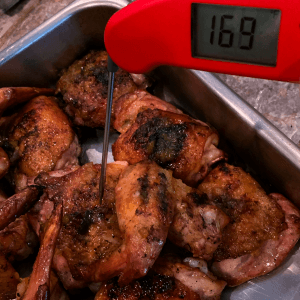
Rest the chicken: Once you remove the chicken from the grill, let it rest for at least 5 minutes. This allows the juices to redistribute and the internal temperature to rise another 5-10 degrees, reaching the safe temperature.
Use a meat thermometer: This is the most reliable way to check for doneness. Insert the thermometer into the thickest part of the meat, not touching any bone.
Target 165 degrees Fahrenheit for breasts: Boneless chicken breasts are safe to eat when they reach an internal temperature of 165 degrees Fahrenheit.
Target 175–185 degrees Fahrenheit for thighs and drumsticks: Thighs and drumsticks are safe at a slightly higher temperature, ranging from 175 to 190 degrees Fahrenheit, depending on the cut.
Grilled Chicken Tricks
- Brine first: Soaking chicken in a brine of salt and water can help retain moisture during cooking.
- Use a thermometer: Always use a meat thermometer to ensure the chicken reaches a safe internal temperature of 165 degrees Fahrenheit.
- Oil the grates: Before adding chicken, lightly oil the grill grates to prevent sticking.
- Pat the chicken dry: For better browning and to prevent the chicken from steaming, pat it dry with paper towels before grilling.
- Baste sparingly: Basting with sugary marinades can cause the chicken to burn. Save sugary sauces for the last few minutes of cooking or use them after the chicken is cooked.
- Let it rest: Allow the chicken to rest for a few minutes after cooking before slicing or serving to let the juices redistribute.



 Lauren Cook



Add comment